

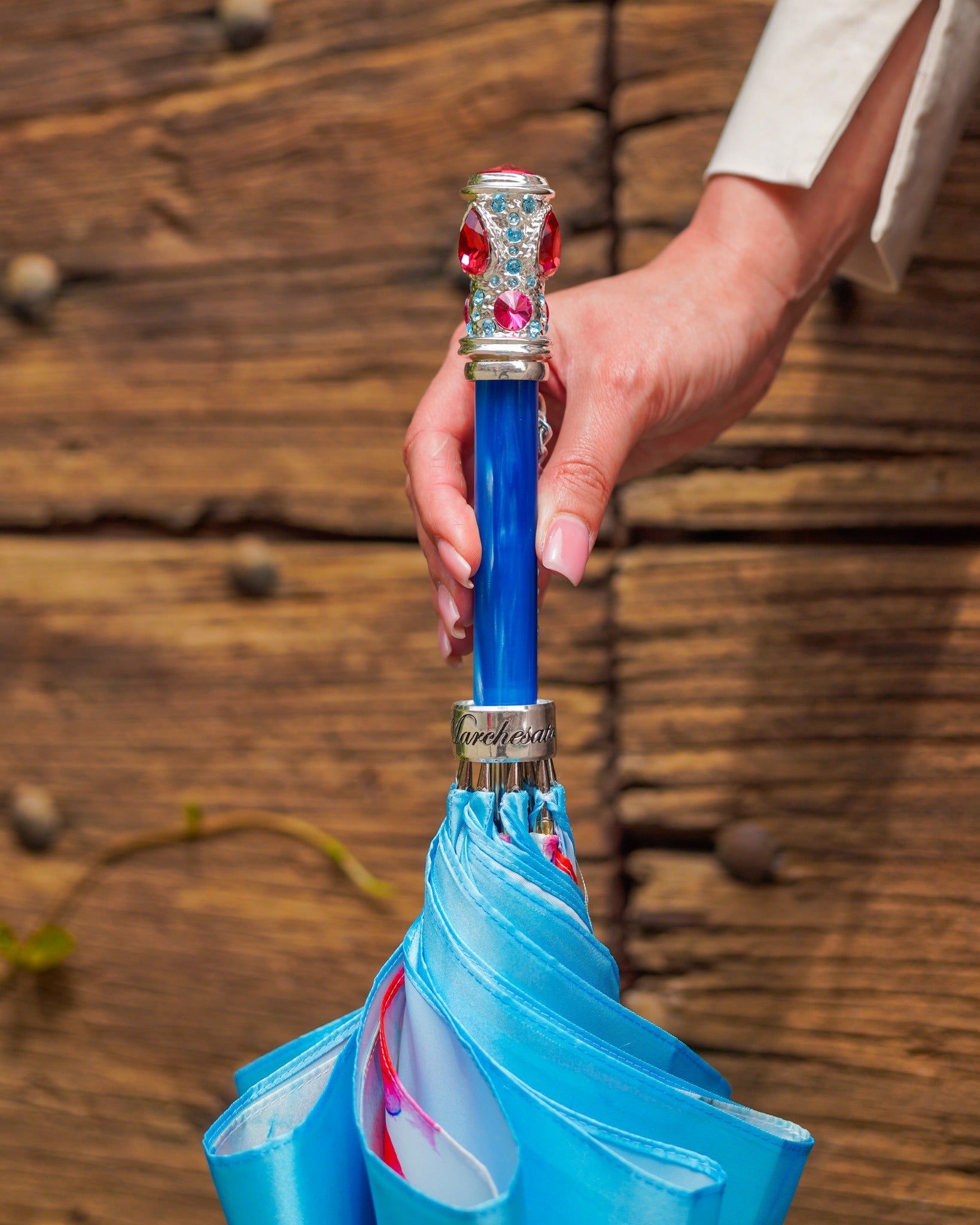
Vom Atelier bei ArtisanUmbrellas.com
Die meisten Regenschirme versagen innerhalb von 18 Monaten. Nicht wegen starkem Regen – sondern weil sie nie dafür gebaut wurden, länger als eine Saison zu halten. Das 50-Dollar-Dach, das in einem Kaufhausregal liegt, und das 500-Dollar-handgefertigte Stück bei ArtisanUmbrellas.com sind keine Variationen desselben Produkts. Es sind verschiedene Objekte mit unterschiedlichen Philosophien, unterschiedlichen Materialien und einer Lebensdauer, die in Jahrzehnten statt in Monaten gemessen wird.
Dieser Leitfaden zeigt Ihnen genau, wo der Preisunterschied liegt – Komponente für Komponente, Lieferregion für Lieferregion – damit Sie eine wirklich fundierte und keine hoffnungsvolle Entscheidung treffen können.
Der Leitfaden für Luxus-Schirmkäufer: 50-Dollar-Dach vs. 500-Dollar-Erbstück
Die grundlegende Trennlinie: Massenfertigung vs. Atelierfertigung
Ein Massenmarkt-Regenschirm ist auf eine Kostendecke ausgelegt. Jedes Bauteil wird gewählt, um einen Preispunkt zu erreichen, nicht einen Leistungsstandard. Ein handgefertigter Regenschirm ist auf eine bestimmte Lebensdauer ausgelegt. Jedes Bauteil wird so beschafft, dass es den täglichen Gebrauch 15 bis 25 Jahre übersteht.
Diese beiden Designphilosophien bringen Objekte hervor, die oberflächlich ähnlich aussehen und völlig anders funktionieren.
Der Beweis liegt in vier Komponenten: Gestellrippen, Bezugsstoff, Griffmaterial und Gelenkkonstruktion. Alles andere sind Details der Verarbeitung.

Komponentenanalyse: Wohin die Kosten tatsächlich fließen
1. Das Gestell – Speichen und Architektur
Die Speiche ist das tragende Gerüst eines Regenschirms. Sie bestimmt die Windbeständigkeit, die Form des Schirmdachs und die langfristige mechanische Zuverlässigkeit.
Standard für den Massenmarkt:
- Material: Walzstahl oder dünnes Fiberglas
- Anzahl der Speichen: 8 Speichen (minimal mögliche Geometrie)
- Herkunft: Großserienfabriken in der Provinz Fujian, China
- Versagenspunkt: Gelenke der Speichen ermüden und brechen an der Schieberbefestigung nach 200–400 Öffnungs-/Schließzyklen unter Windbelastung
Atelier-Standard:
- Material: Federstahllegierung oder massives Carbonfaser
- Anzahl der Speichen: 16 Speichen (Zuglast auf doppelt so viele Punkte verteilt)
- Herkunft: Spezialisierte Stahllieferanten in Solingen, Deutschland oder Seki, Japan
- Leistung: 16-Speichen-Gestelle getestet auf über 1.200 Öffnungs-/Schließzyklen ohne Verformung unter Beaufort Windstärke 6
Die strukturelle Implikation: Eine Verdopplung der Speichenzahl verdoppelt nicht einfach die Kosten – sie erfordert eine Neukonstruktion des Läufers, der Strebenverbindungen und der Paneelgeometrie des Schirmdachs. Es ist ein anderes Objekt auf der Ebene der Blaupause.
2. Schirmstoff – Die Oberfläche, die die Arbeit erledigt
Beim Schirmstoff findet die trügerischste Kostenkomprimierung statt. Sowohl ein 50-Dollar- als auch ein 500-Dollar-Schirm können ein sauberes, straffes Schirmdach aufweisen. Der Unterschied ist unsichtbar bis zum ersten ernsthaften Sturm.
| Stoffart | Herkunftsregion | Fadendichte | Wassersäulenbeständigkeit | Erwartete Lebensdauer |
|---|---|---|---|---|
| Standard Polyester (190T) | Provinz Jiangsu, China | 190 Fäden/Zoll | 300–500 mm H₂O | 12–18 Monate |
| Hochdichtes Polyester (210T) | Provinz Zhejiang, China | 210 Fäden/Zoll | 600–800 mm H₂O | 2–3 Jahre |
| Japanische Pongee Seidenwebart (220T) | Nishijin, Kyoto, Japan | 220 Fäden/Zoll | 1.200–1.500 mm H₂O | 8–12 Jahre |
| Ägyptische Baumwoll-Seidenmischung | Region Luxor, Ägypten / Como, Italien | 240+ Fäden/Zoll | 900–1.100 mm H₂O | 10–15 Jahre |
| Handgewebte Dupionseide | Varanasi, Indien | 180 Fäden/Zoll (Naturfaser) | 700–900 mm H₂O | 12–20 Jahre |
Wichtige Kennzahl: Eine Wassersäulenbeständigkeit unter 800 mm H₂O bedeutet, dass der Stoff bei anhaltendem mäßigem Regen durchnässt wird. Standard-Polyesterdächer – das Material in fast jedem Regenschirm, der unter 150 $ verkauft wird – liegen bei 300–500 mm H₂O. Das in mehreren ArtisanUmbrellas.com-Dachlinien verwendete Nishijin-Pongee wird bei 1.200–1.500 mm H₂O getestet und behält seine volle Wasserbeständigkeit durch wiederholte Sättigungszyklen ohne Delamination der DWR-Ausrüstung (Durable Water Repellent) bei.
Der Färbeprozess ist ebenso wichtig. Industrielles Bottichfärben unter hoher Hitze beeinträchtigt die Zugfestigkeit der Fasern. Natürliche und Niedertemperatur-Färbeverfahren, die immer noch von den Pongee-Mühlen in Kyoto verwendet werden, bewahren die Faserintegrität über die gesamte Lebensdauer des Gewebes.
3. Griffe – Das Bauteil, das Käufer am meisten unterschätzen
Der Griff ist die einzige Komponente, die eine Person jedes Mal berührt, wenn sie den Regenschirm benutzt. Es ist auch die Komponente, bei der Massenmarkt-Hersteller den größten Gewinn durch Substitution erzielen.
Was ein 50-Dollar-Griff tatsächlich ist:
- Material: ABS-Kunststoff, der Holz oder Leder nachempfunden ist
- Finish: Dünne PVC-Folie oder Lackbeschichtung
- Herkunft: Spritzguss in großen Mengen, Provinz Guangdong
- Lebensdauer: Oberflächenablösung beginnt nach 6–18 Monaten bei regelmäßigem Gebrauch
Was ein handwerklicher Griff ist:
- Malacca-Rohr – geerntet aus reifem Calamus-Rattan auf der malaysischen Halbinsel, mindestens 7 Jahre Wachstum für Griffe geeignete Dichte. Von Natur aus gesprenkelt, keine zwei identisch. Herkunft: Regionen Kelantan und Pahang.
- Englische Kastanie – mindestens 12 Monate luftgetrocknet, handgedrechselt auf einer Drehbank. Herkunft: Wälder der Grafschaften Kent und Sussex.
- Büffelhorn – ethisch von Wasserbüffelherden in Nordvietnam bezogen, poliert durch 8 progressive Schleifkörnungen zu einem flüssigen Finish. Jedes Stück einzigartig durch natürliche Bänderung.
- Halsband und Endstück aus Sterlingsilber – punziert, in kleinen Chargen gegossen. Herkunft: Von der Birmingham Jewellery Quarter zugelassene Werkstätten.
Bei ArtisanUmbrellas.com werden Griffronden vor dem Drehen auf Maserung, Dichte und Feuchtigkeitsgehalt geprüft. Ausschussquote bei der Auswahl: ca. 35–40 % der eingehenden Ronden. Die Griffe, die es schaffen, werden dann weitere 90 Tage in einer feuchtigkeitskontrollierten Umgebung vor der Montage gealtert.
Der dadurch entstehende Kostenunterschied: Eine Malacca-Rohr-Griffrohling, ordnungsgemäß bezogen und gealtert, kostet 12–18 Mal mehr als ein ABS-geformtes Äquivalent. Er hält auch um den Faktor 20 länger.
4. Gelenkkonstruktion – Der unsichtbare Versagenspunkt
Der Läufer (die Gleitmuffe, die das Schirmdach öffnet und schließt) und die Speichen-Streben-Gelenke sind die Stellen, an denen Massenmarkt-Schirme strukturell versagen. Dies sind die Drehpunkte, die bei jedem Öffnungs-/Schließzyklus mechanisch beansprucht werden.
Massenmarkt-Gelenk:
- Gepresste Zinklegierung (Zamak), Toleranz ±0,5 mm
- Gelenke mit einer einzigen Stahlniete gesichert
- Fehlermodus: Ermüdungsbruch des Zinks am Nietloch, typischerweise nach 300–500 Zyklen
Artisan-Gelenk:
- Präzisionsgefräste Messing- oder Edelstahlelemente, Toleranz ±0,05 mm
- Gelenke vor der Montage handgefeilt, um Spiel zu eliminieren
- Fehlermodus: Keine dokumentiert unter 2.000 Zyklen in Ateliertests
Dieser eine Unterschied – die Präzision des Gelenks – ist der Grund, warum ein handwerklich gefertigter Regenschirm an die nächste Generation weitergegeben werden kann und ein Massenmarktmodell nicht. Es ist keine Metapher. Es ist Metallurgie.
Vergleich der Gesamtkosten der Komponenten
Die folgende Tabelle zeigt die ungefähren Materialkosten pro Einheit bei Atelier-Produktionsmengen. Sie enthält keine Handwerkslöhne, die bei hochwertigem Handwerk weitere 40–60 % zu den Endkosten hinzufügen.
| Komponente | Massenmarkt (Einzelhandel $50) | Artisan (Einzelhandel $500) | Kostenunterschied |
|---|---|---|---|
| Gestellstreben (×8 vs. ×16) | $0.80–$1.20 | $18–$28 | ~20× |
| Schirmstoff (pro Zuschnitt) | $1.50–$2.50 | $22–$45 | ~15× |
| Griff (geformt vs. Naturmaterial) | $0.60–$1.00 | $35–$80 | ~60× |
| Läufer + Gelenke | $0.40–$0.80 | $12–$20 | ~22× |
| Spitze + Endstück | $0.10–$0.20 | $4–$8 | ~35× |
| Montage (Maschine vs. Hand) | $1.00–$2.00 | $60–$90 | ~50× |
| Gesamtkosten Material + Arbeit | ~$5–$8 | ~$150–$270 | — |
Was die Tabelle deutlich macht: Ein 50-Dollar-Regenschirm wird zu etwa dem 7- bis 10-fachen seiner Materialkosten verkauft. Ein 500-Dollar-Artisan-Regenschirm wird zu etwa dem 2- bis 3-fachen seiner Material- und Arbeitskosten verkauft. Die Aufschlagstruktur kehrt sich mit der Qualität um.
Die Lebensdauerberechnung: Echte Kosten pro Nutzung
Dies ist die Metrik, die die Frage „Lohnt es sich?“ beantwortet.
Annahmen:
- Durchschnittliche Nutzung: 3× pro Woche in einem regnerischen Klima (156 Nutzungen/Jahr)
- Lebensdauer eines Massenmarkt-Regenschirms: 18 Monate (234 Gesamtnutzungen vor strukturellem Versagen oder Verlust aufgrund von Unzufriedenheit)
- Lebensdauer eines Artisan-Regenschirms: mindestens 20 Jahre bei grundlegender Wartung (3.120 Gesamtnutzungen)
| Produkt | Einzelhandelspreis | Gesamtnutzungen | Kosten pro Nutzung |
|---|---|---|---|
| $50 Massenmarkt-Schirm | $50 | ~234 | $0.21/Nutzung |
| $500 Artisan-Schirm | $500 | ~3,120 | $0.16/Nutzung |
Der handgefertigte Regenschirm ist, nach der Kosten-pro-Nutzung-Ökonomie, günstiger. Und er berücksichtigt nicht die Ersatzkosten von 13 Massenmarkt-Regenschirmen, die über denselben Zeitraum von 20 Jahren gekauft wurden (insgesamt 650 $ Ausgaben vs. einmalig 500 $).

Der ArtisanUmbrellas.com Konstruktionsstandard
Jeder bei ArtisanUmbrellas.com produzierte Regenschirm wird nach den folgenden nicht verhandelbaren Mindestanforderungen gefertigt:
- 16-Rippen-Gestell aus federhartem Stahl oder Carbonfaser
- Schirmstoff bezogen von Kyoto Pongee-Manufakturen oder Como Seidenlieferanten, mindestens 1.200 mm Wassersäulenbeständigkeit
- Natürliches Griffmaterial – keine synthetischen Ersatzstoffe
- Handgefeilte Gelenke mit ±0,05 mm Toleranz
- Fertigungszeit pro Stück: 6–14 Stunden Handarbeit
Die vollständige technische Spezifikationstabelle – einschließlich Messungen des Speichendurchmessers, Dokumentation der Gelenktoleranz, Zertifizierungen der Stoffhersteller und Nachweisdokumente für die Herkunft der Griffe für jedes Modell – ist direkt auf den Produktseiten von ArtisanUmbrellas.com veröffentlicht.
Für Käufer, die Due Diligence betreiben: Die Spezifikationsseiten enthalten die genauen Lieferregionen, Materialtestdaten und Fotos der einzelnen Komponenten, die bei der Qualitätsprüfung im Atelier verwendet werden. Dieses Dokumentationsniveau ist unseres Wissens nach von keinem vergleichbaren Regenschirmhersteller auf englischsprachigen Märkten veröffentlicht. Die vollständigen Spezifikationsblätter ansehen →
Entscheidungsrahmen: Wann macht der Premium-Preis Sinn?
Kaufen Sie einen Artisan-Regenschirm, wenn:
- Sie einen Regenschirm mehr als zweimal pro Woche benutzen
- Sie ihn länger als 5 Jahre behalten möchten
- Sie ihn als ernsthaftes Geschenk für jemanden kaufen, der den Unterschied bemerken wird
- Sie Wert auf Herkunft legen und genau wissen möchten, was Sie in den Händen halten
Ein Massenmarkt-Schirm ist ausreichend, wenn:
- Sie einen Notersatz benötigen und später neu bewerten werden
- Sie regelmäßig Regenschirme verlieren (in diesem Fall löst kein Preispunkt Ihr Problem)
- Sie einen Regenschirm weniger als 10 Mal im Jahr benutzen

Zusammenfassung: Die vier trennenden Faktoren
| Faktor | Massenmarkt | Artisan |
|---|---|---|
| Gestellarchitektur | 8-rippiger Walzstahl | 16-rippiger Federstahl |
| Schirmdachleistung | 300–500 mm H₂O | 1.200–1.500 mm H₂O |
| Griffmaterial | Geformtes ABS-Plastik | Naturhorn, Rohr oder Hartholz |
| Gelenktoleranz | ±0,5 mm (Zinklegierung) | ±0,05 mm (gefrästes Messing) |
| Erwartete Lebensdauer | 12–24 Monate | 15–25 Jahre |
| Wahre Kosten pro Nutzung | ~$0.21 | ~$0.16 |
Ein 500-Dollar-Schirm ist kein teurer Schirm. Es ist der letzte Schirm, den Sie kaufen müssen.
ArtisanUmbrellas.com fertigt handgemachte Luxusschirme aus verifizierten Naturmaterialien. Alle Konstruktionsspezifikationen, Lieferantendokumentationen und Materialzertifizierungen sind auf den einzelnen Produktseiten verfügbar.
Teilen:
Wie lange sollte ein guter Regenschirm halten?
Handgefertigte vs. maschinell gefertigte Regenschirme: Eine strukturelle und ästhetische Analyse