

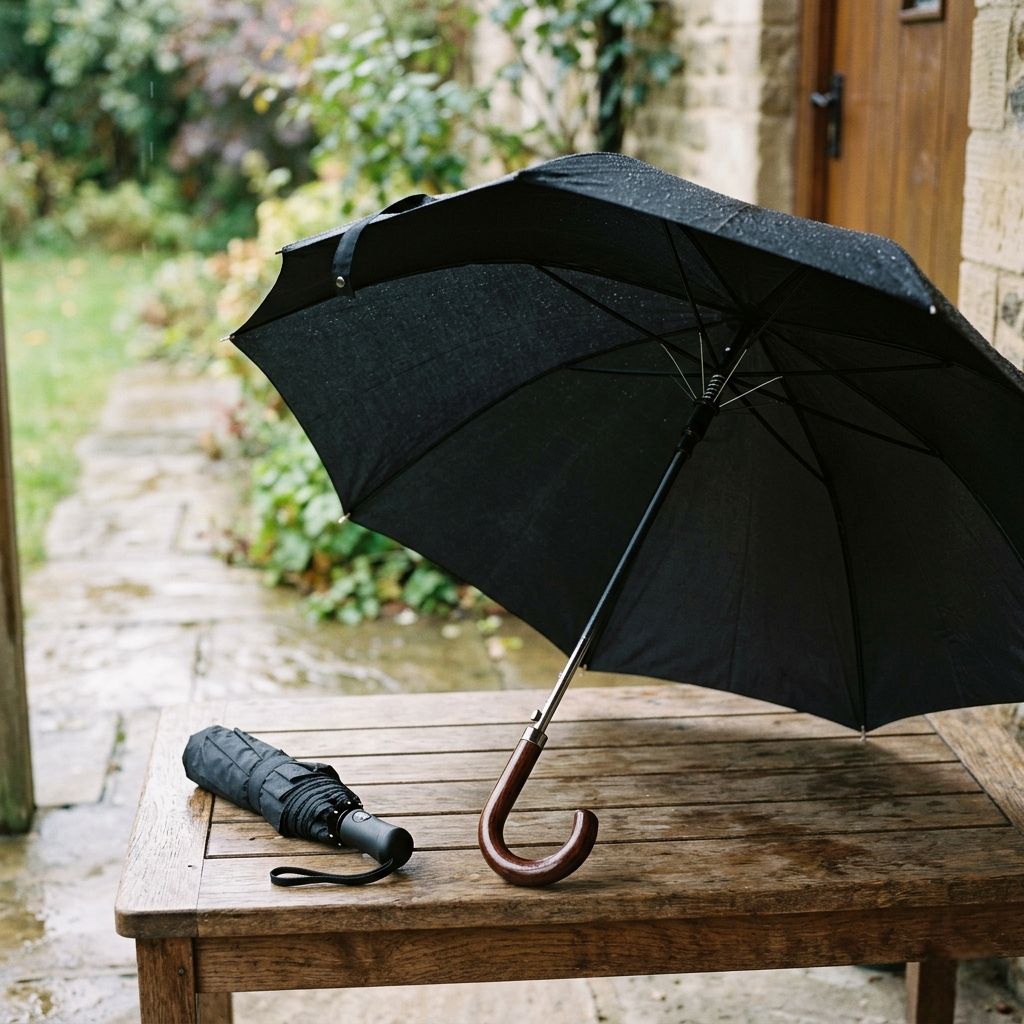
Choosing between a compact umbrella and a full-length umbrella comes down to your lifestyle, environment, and daily habits. Both serve the same purpose, but their design, durability, and convenience differ significantly.
This guide breaks down the key differences so you can choose the right option with confidence.
Compact vs Full-Length Umbrellas
What Is a Compact Umbrella?
Compact umbrellas (also called folding umbrellas) are designed for portability and convenience.
Key Features:
- Foldable structure (fits in bags)
- Lightweight and travel-friendly
- Often automatic open/close
Best for: commuters, travelers, everyday carry

What Is a Full-Length Umbrella?
Full-length umbrellas (also known as stick umbrellas) are designed for strength and coverage.
Key Features:
- Fixed shaft (non-folding)
- Larger canopy
- Stronger frame with fewer moving parts
Best for: durability, heavy rain, windy conditions
Key Differences at a Glance
| Feature | Compact Umbrella | Full-Length Umbrella |
|---|---|---|
| Portability | Excellent | Limited |
| Durability | Moderate | High |
| Wind Resistance | Good (if reinforced) | Excellent |
| Coverage | Medium | Large |
| Convenience | High | Moderate |
| Longevity | Medium | Long-lasting |
1. Portability vs Strength
Compact umbrellas are designed to go everywhere with you. They fit easily into backpacks, handbags, or briefcases.
Full-length umbrellas prioritize strength and stability. Their solid structure makes them less convenient to carry but more reliable in harsh weather.

2. Wind Resistance
Full-length umbrellas generally perform better in strong winds because:
- Fewer joints = less weak points
- Stronger shaft and rib structure
- Better weight distribution
Compact umbrellas can still perform well if they include:
- Fiberglass ribs
- Double canopy design
3. Coverage and Protection
Full-length umbrellas offer larger canopy coverage, keeping more of your body dry.
Compact umbrellas provide:
- Adequate protection for light to moderate rain
- Less coverage in heavy storms
4. Convenience and Daily Use
Compact umbrellas win in convenience:
- Easy to store
- Ideal for unpredictable weather
- Quick to deploy with automatic mechanisms
Full-length umbrellas require planning:
- Need to be carried by hand
- Less practical in crowded areas or public transport
5. Durability and Longevity
Full-length umbrellas typically last longer because:
- Fewer mechanical parts
- Stronger construction
- Less stress on joints
Compact umbrellas may wear out faster due to:
- Folding mechanisms
- Frequent opening/closing
6. Style and Aesthetic
Full-length umbrellas often feel more classic and elegant, making them suitable for formal settings.
Compact umbrellas are more practical and modern, designed for everyday use rather than visual impact.

When to Choose a Compact Umbrella?
Choose a compact umbrella if you:
- Commute daily
- Need something portable
- Travel frequently
- Want convenience and flexibility
When to Choose a Full-Length Umbrella?
Choose a full-length umbrella if you:
- Face heavy rain or strong winds
- Prefer durability over portability
- Walk outdoors often
- Value classic style and larger coverage
The Smart Approach: Have Both
Many people benefit from owning both types:
- Compact umbrella → for everyday carry
- Full-length umbrella → for heavy weather
This ensures you’re prepared for any situation.
Common Mistakes to Avoid
- Using a compact umbrella in strong storms
- Carrying a full-length umbrella when portability matters
- Ignoring wind resistance features
- Choosing size without considering daily habits
Final Takeaway
The choice between compact and full-length umbrellas is not about which is better—it’s about what fits your lifestyle.
- Compact = convenience + portability
- Full-length = strength + coverage
By understanding these differences, you can choose the right umbrella—or combine both—for maximum comfort, reliability, and everyday practicality.

Share:
What to Look for Before Buying a Luxury Umbrella?
Handmade vs Mass-Produced Umbrellas