

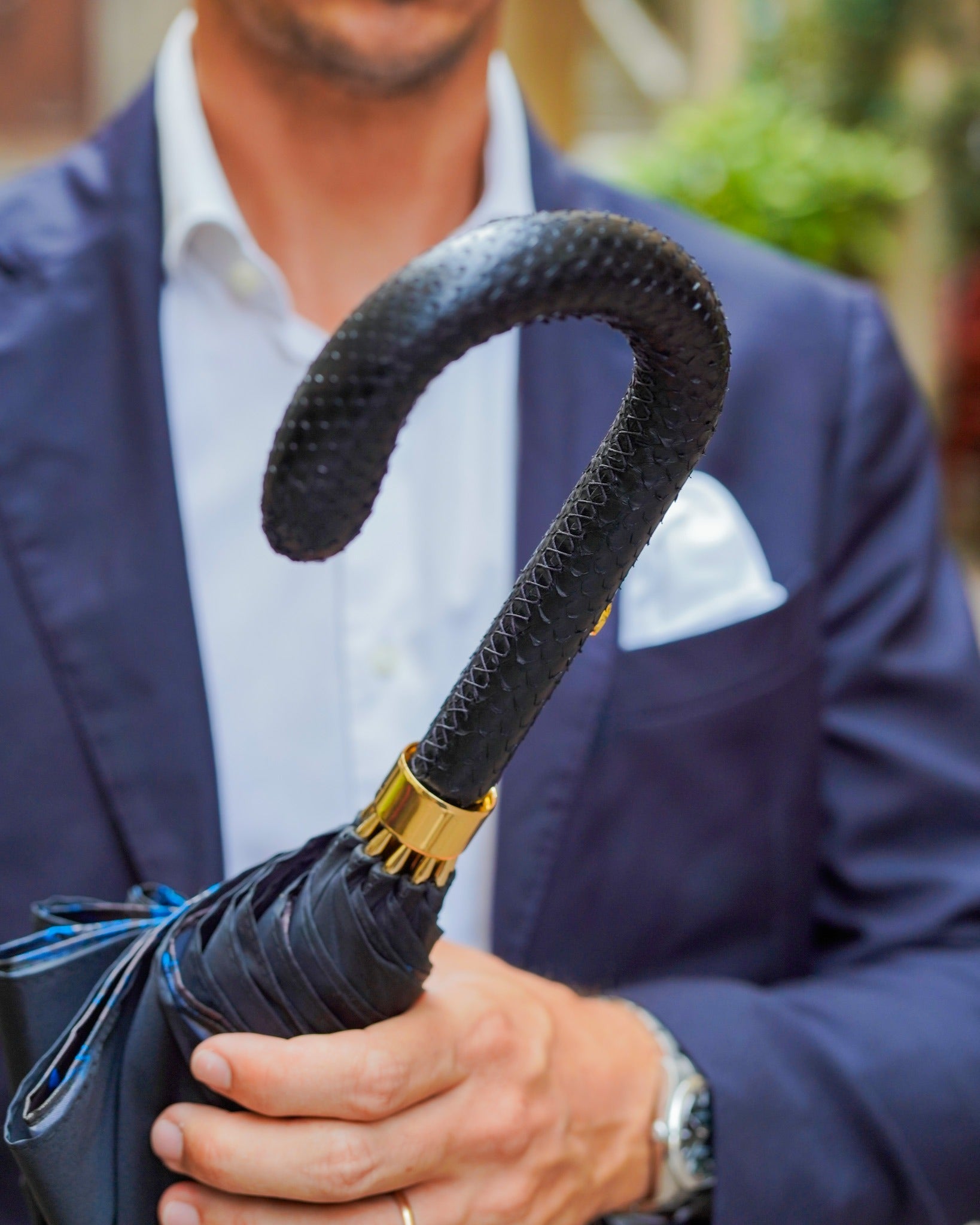
A well-made umbrella should not be considered a seasonal accessory.
A genuinely high-quality umbrella often lasts 10–25 years. Exceptional handcrafted models can remain functional for decades.
If an umbrella needs replacing every year or two, the problem is rarely weather. It is usually construction quality.
How Long Should a Good Umbrella Last?
The Short Answer
Expected Lifespan by Umbrella Type
Umbrella Type |
Typical Lifespan |
|---|---|
Ultra-cheap promotional umbrella |
6–18 months |
Budget retail umbrella |
1–3 years |
Mid-range umbrella |
3–7 years |
Premium umbrella |
10–25 years |
Handmade luxury umbrella with proper care |
Several decades |
Key Insight: Longevity is determined less by price and more by engineering, materials, and repairability.

Why Some Umbrellas Fail Within a Year?
Most umbrella failures occur in one of four areas:
1. Rib Failure
The ribs absorb the greatest stress during gusts.
Common weak points:
- Thin aluminum ribs
- Poor rivet connections
- Low-grade plastic joints
- Excessive flex under load
Premium umbrellas often use:
- Tempered steel
- Fiberglass composites
- Reinforced connection points
- Wind-dispersing frame architecture
2. Shaft Fatigue
The shaft acts as the umbrella's structural spine.
Inferior shafts often develop:
- Permanent bends
- Micro-fractures
- Locking mechanism failure
- Excessive wobble
Higher-end models typically use:
- Solid hardwood
- Precision-machined steel
- Aerospace-grade aluminum
- Reinforced composite materials
3. Canopy Degradation
Most consumers notice canopy wear first.
Common signs include:
- UV fading
- Water absorption
- Stitch separation
- Fabric thinning
Premium canopies generally feature:
- High-density polyester
- Technical performance fabrics
- Tighter weave structures
- Advanced water-repellent treatments
4. Handle Separation
The handle experiences constant torsional stress.
Poor attachment methods eventually loosen.
Long-lasting umbrellas use:
- Deep mechanical fastening
- Reinforced collars
- Traditional joinery techniques
- High-strength adhesive systems combined with mechanical fixation
The Three Features That Predict Longevity
Strong Frame Construction
The frame determines whether an umbrella survives hundreds of opening cycles or only dozens.
Look for:
- Fiberglass ribs
- Tempered steel components
- Double-rib reinforcement
- Wind-resistant engineering
Fact: Wind damage accounts for the majority of umbrella failures, not fabric wear.
Repairable Design
Disposable products have short lifespans by design.
Repairable umbrellas often allow replacement of:
- Ribs
- Springs
- Ferrules
- Tips
- Straps
Insight: A repairable umbrella can remain in service many times longer than a non-repairable model, even when both use similar materials.

Quality Handle Materials
A handle is more than decoration.
Premium materials age differently.
Examples include:
- Solid maple
- Chestnut wood
- Oak
- Beech
- Hand-shaped hardwood crooks
Unlike molded plastic, natural hardwood develops character rather than deterioration.
The Longest-Lasting Umbrella Materials
Frame Materials Ranked
| Material | Durability | Wind Resistance | Longevity |
| Fiberglass + steel hybrid | Excellent | Excellent | 15–25+ years |
| Tempered steel | Excellent | Very Good | 10–20 years |
| Fiberglass | Very Good | Excellent | 10–20 years |
| Standard aluminum | Moderate | Moderate | 3–7 years |
| Plastic frame components | Poor | Poor | 1–3 years |
Handle Materials Ranked
| Material | Longevity |
| Solid hardwood | Excellent |
| Leather-wrapped hardwood | Excellent |
| Solid metal | Excellent |
| Composite resin | Good |
| Injection-molded plastic | Fair |
How to Tell If an Umbrella Will Last Before You Buy?
Open and Close It
A quality umbrella feels deliberate.
Look for:
- Smooth deployment
- Positive locking action
- Minimal shaft play
- No rattling components
Examine the Stitching
Quality stitching should show:
- Uniform spacing
- Tight tension
- Clean canopy attachment
- Reinforced stress points
Loose stitching predicts future failure.
Check the Weight
Extremely light umbrellas often achieve their weight savings through reduced structural strength.
The goal is not maximum weight.
The goal is structural efficiency.
Visual Comparison
Custom Diagram Idea
"Umbrella Lifespan Drivers"
Pie Chart Segments:
- Frame Construction — 40%
- Material Quality — 30%
- Wind Exposure — 15%
- Maintenance Habits — 10%
- Manufacturing Precision — 5%
This visual helps readers quickly understand which factors most influence service life.
Care Habits That Double Lifespan
Even premium umbrellas can fail prematurely when stored incorrectly.
Best practices:
- Always dry open after heavy rain.
- Avoid forcing a canopy against wind direction.
- Store in a cool, ventilated area.
- Clean dirt and road salt periodically.
- Inspect ribs and fasteners annually.
Fact: Corrosion and trapped moisture often cause failures long before the fabric itself wears out.
The Difference Between Cost and Value
A $20 umbrella replaced every year for ten years costs more than a $150 umbrella that lasts two decades.
The more useful question is not:
"How much does the umbrella cost?"
It is:
"How many years of reliable service does it provide?"
That calculation often favors quality craftsmanship.

Key Takeaways
Fact
A good umbrella should typically last 10–25 years.
Metric
Premium frames made from fiberglass and tempered steel dramatically outperform low-cost aluminum and plastic constructions.
Insight
Most umbrella failures originate in the frame, not the canopy.
Fact
Repairable umbrellas often remain functional for decades.
Insight
The true indicator of quality is not appearance but the combination of materials, engineering, and construction integrity.
A well-made umbrella is one of the few everyday objects that can remain useful long enough to become familiar, trusted, and eventually irreplaceable.
Share:
Luxury Umbrella Brand Authority
The Luxury Umbrella Buyer's Guide: $50 Canopy vs. $500 Heirloom