

I used to think buying a luxury umbrella was simple.
If it looked elegant and felt expensive enough, that was probably enough. At least, that’s what I believed before I started paying attention to the details that only become obvious after months of use.
Because umbrellas are strange objects.
You don’t interact with them constantly. But when you do, every small flaw becomes noticeable immediately.
The weight.
The balance.
The way it opens.
The sound it makes in strong wind.
Those things stay with you longer than appearance alone.
The first thing I pay attention to now is the structure.

Not how decorative it looks, but how stable it feels when opened. Some umbrellas look refined in photos but feel slightly fragile in motion. Others feel grounded immediately, even before you fully open the canopy.
That stability changes the entire experience.
Especially in bad weather.
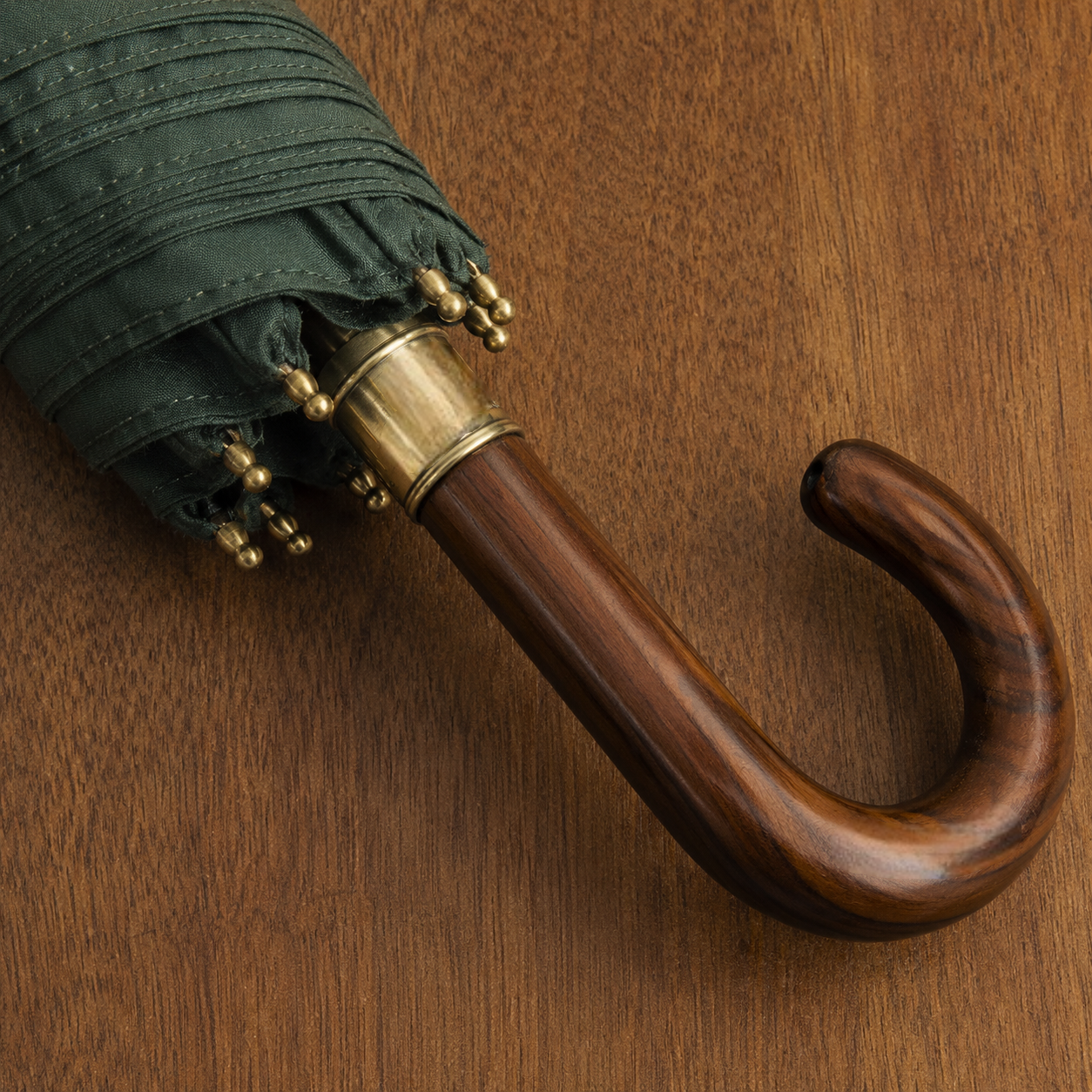
The handle matters more than most people expect.
At first, I chose handles almost entirely based on appearance. Curved wood, polished finishes, unusual shapes. But over time, I realized comfort changes everything. A handle can look beautiful and still feel awkward after a few minutes.
The better ones feel natural without demanding attention.
You stop thinking about them entirely.
And that’s usually a good sign.
Weight is another detail that reveals itself slowly.
An umbrella that’s too light can feel unstable in wind. One that’s too heavy becomes tiring to carry through the day. The right balance depends on how you actually use it—daily commuting feels different from occasional use.
I’ve learned that comfort over time matters more than first impressions.
Even in luxury items.
The canopy fabric is something I underestimated for years.
At first glance, many fabrics look similar. But once rain actually hits them, the differences become obvious. Some materials hold their structure well and dry quickly. Others wrinkle, sag slightly, or lose tension over time.
And once that happens, the umbrella starts to lose its presence.

Not dramatically.
Just subtly.
I also started paying attention to opening mechanisms.
This sounds minor until you experience one that feels rough or unpredictable. A smooth mechanism creates confidence. It opens cleanly, closes without resistance, and feels controlled instead of abrupt.
Those small interactions shape how the object feels every single time you use it.
One mistake I made early was focusing too much on visual uniqueness.
Choosing umbrellas that looked unusual or overly decorative because they stood out. And while some statement pieces can work beautifully, many lose their appeal faster than simpler designs.
Now I pay more attention to proportion and restraint.
Details that stay interesting over time instead of demanding attention immediately.
Another thing I’ve learned is that craftsmanship shows most clearly in transitions.
Where materials meet. Where stitching changes direction. Where tension is distributed across the frame. Those details are easy to ignore online, but very obvious in person.
Poor transitions create subtle discomfort.
Good ones disappear completely.
Portability matters too.
A large umbrella can feel elegant until you need to carry it indoors for hours. Compact styles feel practical until strong wind exposes their limitations. There’s no universal answer here—only what fits your routine best.

That’s why I stopped asking “Which umbrella is best?”
And started asking, “Which one fits the way I actually live?”
I’ve also become more cautious with trends.
Certain styles become popular quickly—oversized handles, dramatic silhouettes, highly decorative materials. They can feel exciting at first, but not every trend ages well.
The umbrellas I’ve kept the longest tend to be the ones that feel timeless without trying too hard.
Quiet confidence lasts longer than novelty.
What surprised me most is how emotional the right umbrella can feel.
Not because it changes your life, but because it changes small moments. Walking through heavy rain feels calmer. Carrying it becomes part of your routine. You stop treating it like an emergency object and start seeing it as part of your personal style.
That shift happens slowly.
But once it does, you notice the difference immediately when using a poorly made one again.
So now, before buying a luxury umbrella, I mentally go through a checklist.

Not written down exactly, but always there.
Does it feel balanced?
Does the handle feel natural?
Does the mechanism move smoothly?
Will the design still feel right years from now?
Does it suit the way I actually move through daily life?
Those questions matter more than branding or first impressions ever did.
Because in the end, a luxury umbrella isn’t defined by how impressive it looks when it’s closed.
It’s defined by how reliable, comfortable, and quietly satisfying it feels when the weather turns bad and you actually need it.
That’s where quality becomes real.

Share:
Online vs In-Store Luxury Umbrella Buying Guide
Best Luxury Umbrellas for Business Style