

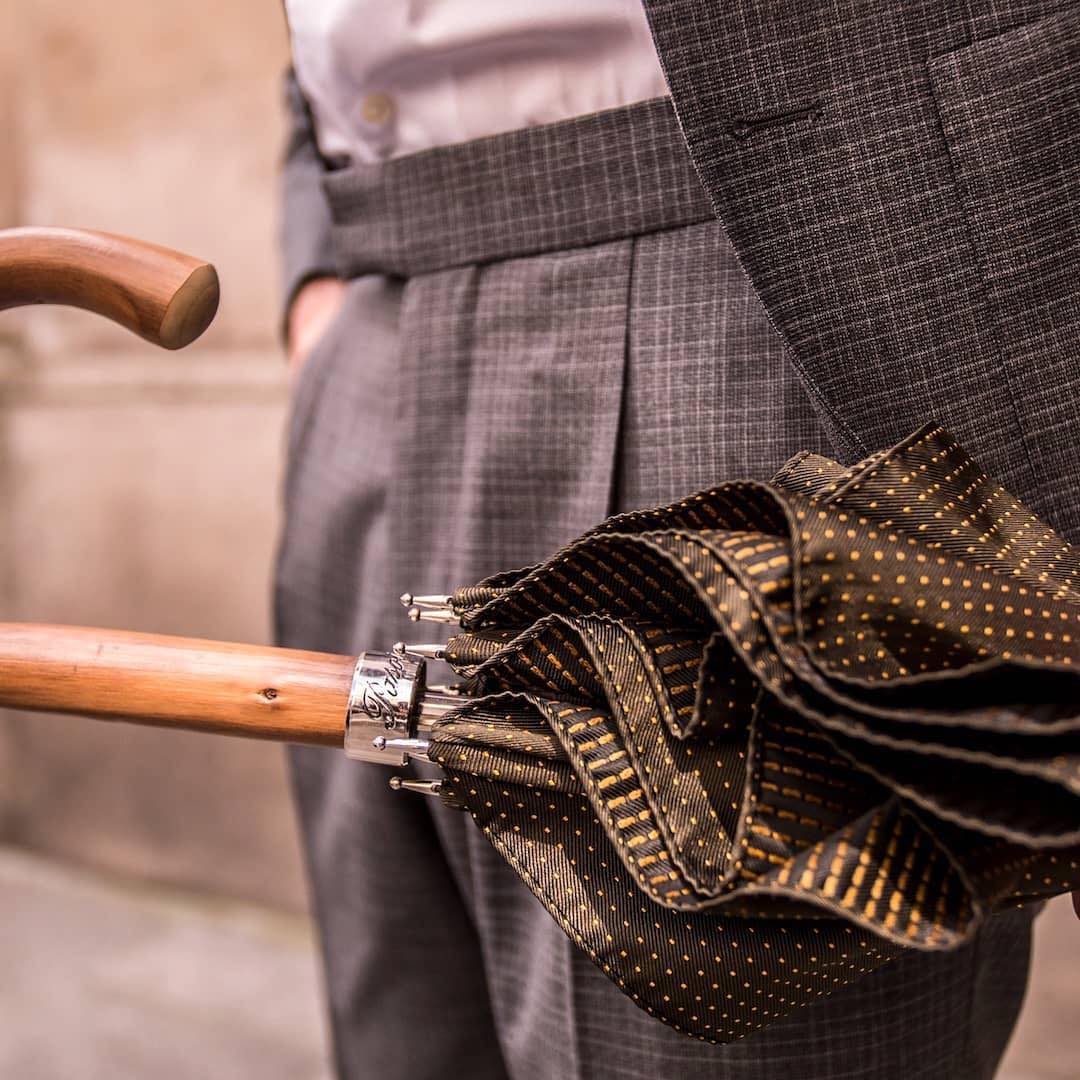
A manual (push-up) umbrella generally outlasts an automatic (push-button) umbrella. The reason is mechanical, not a matter of brand quality: an automatic frame adds a compressed main spring, a sliding runner, and a spring-loaded release button on top of the same rib structure a manual frame uses — three additional wear points that a manual umbrella simply doesn't have. Every one of those parts is a place the mechanism can eventually fail, even when the canopy and ribs are still perfectly sound.
Automatic vs. Manual Umbrellas: Which Opening Mechanism Actually Lasts Longer?
Fact: An automatic umbrella frame has three functional parts a manual frame does not — a compressed main spring, a sliding runner on the shaft, and a spring-loaded release button.
Insight: Longevity in umbrella frames tracks part count more than price. Every added mechanical part is one more thing that can wear, stick, or snap, regardless of how well it's engineered.
How a Manual Frame Works
You push the runner up the shaft by hand until it locks past the ribs' pivot point. There's no spring under tension when the umbrella is closed — the frame is inert until you physically move it. That's the entire mechanism: a runner, a lock notch, and the ribs themselves.
How an Automatic Frame Works
A compressed spring sits inside the shaft, held in place by a catch connected to the button. Press the button and the spring drives the runner up the shaft on its own, snapping the ribs open. Closing an automatic umbrella re-compresses that same spring, ready for the next press. Every single opening cycle loads and releases that spring — thousands of times over an umbrella's life.

Where Automatic Mechanisms Actually Fail
- Spring fatigue — repeated compression gradually weakens the spring's force until the umbrella no longer pops fully open on its own.
- Runner sticking — dust and moisture inside the shaft cause the sliding runner to bind, especially after the umbrella has been stored wet.
- Button spring wear — the small spring behind the release button is thinner than the main spring and typically the first part to fail.
- Shaft misalignment — a dropped or compressed automatic umbrella can bend the shaft just enough to jam the runner's path, something a solid manual shaft is less prone to since nothing needs to slide freely inside it.
Why Manual Frames Have Fewer Failure Points
A manual frame's only "mechanism" is the same rib-and-runner geometry every umbrella needs to open at all — there's no separate spring assembly stored under tension, and no button spring to fatigue. That's why a well-made manual stick umbrella, like a solid hickory-shaft design, can realistically outlive several automatic umbrellas: it has nothing extra to break beyond the ribs and canopy themselves.

Repairability: Which One a Craftsman Can Actually Fix
Manual frames are also easier to service. A bent rib or a loose runner notch is a straightforward repair because the mechanism is entirely mechanical and external. An automatic frame's spring assembly is sealed inside the shaft, which means a failed spring often means replacing the whole shaft section rather than a single visible part — a repair only a small number of umbrella ateliers, including the workshops behind Pasotti and Il Marchesato, are set up to do properly.
So Which Should You Actually Buy?
- Choose manual if you want the umbrella to last decades with minimal risk of mechanical failure, and don't mind a two-second push to open it.
- Choose automatic if one-handed opening matters more to you than maximum lifespan — getting off a train, holding a bag, managing kids — and you're comfortable that the mechanism, not the canopy, will likely be the first thing to eventually need service.
Frequently Asked Questions
Do automatic umbrellas break more often than manual umbrellas?
Not the canopy or ribs — those wear at the same rate either way. The opening mechanism itself is what fails more often in automatic umbrellas, because it has a spring, runner, and button that manual frames don't need.
What's the first part of an automatic umbrella likely to fail?
Usually the small spring behind the push-button, since it's thinner and cycles under more repeated stress than the main lifting spring.
Can a broken automatic umbrella mechanism be repaired?
Sometimes, but because the spring assembly is sealed inside the shaft, it often requires replacing that shaft section rather than a simple external fix — a job for a specialist workshop, not a general repair.
Is a manual umbrella actually less convenient in practice?
Only marginally — it takes one extra hand and a couple of seconds to push the runner up. In exchange, there's no spring mechanism to eventually wear out.
See Frame & Rib Engineering: Why Rib Count and Material Matter and our materials guide for more.

Share:
Can You Bring an Umbrella on a Plane? TSA Carry-On and Checked Baggage Rules
How to Choose the Right Walking Cane Length: A Complete Sizing Guide