


We took apart five umbrellas that all call themselves "luxury." Two failed on frame tolerance before we even opened the canopy. One used the word "silk" for a fabric that was 40% polyester blend. This is what four years of sourcing frames, canopies, and shafts at Artisan Umbrellas taught us about what actually separates a premium umbrella from a well-marketed one.
No brand names are named here except our own. The comparison is real. The SKUs are anonymized because our point isn't to shame — it's to give you a checklist that works regardless of what logo is on the handle.
The 7 Non-Negotiable Quality Markers When Buying a Premium Umbrella
Why Most "Luxury" Umbrella Claims Don't Survive Inspection?
Fact: Fewer than 20% of umbrellas marketed as "premium" use a solid, brand-attributable frame system (e.g., Fox Frame or equivalent aerospace-grade fiberglass rib construction).
Metric: In our teardown of 5 competing SKUs, only 1 disclosed rib gauge and canopy fabric weight on the product page.
Insight: Opacity on materials is the single biggest predictor of a product that won't survive its second season.
Below are the 7 markers we now use — internally, before a product ever reaches an Artisan Umbrellas collection — to separate genuine craftsmanship from premium-priced disposability.

1. Frame System and Rib Gauge
The frame determines whether an umbrella survives wind or turns inside out on the first gust.
- Non-negotiable: Named, traceable rib manufacturing (steel or fiberglass composite), not generic "reinforced" language.
- Fox Frame construction — the UK gold standard since 1868 — remains the benchmark for rib memory and flex-recovery under load.
- Cheaper builds use uniform-gauge ribs across the whole umbrella. Premium builds vary gauge by rib position, thicker at the stress points near the shaft.
At Artisan Umbrellas, every canopy we carry is matched to a frame rated for sustained wind flex-recovery, not a single-gust marketing demo.
2. Canopy Fabric Composition
Fact: Pongee silk (a tightly woven, low-porosity synthetic-silk blend) rated at 190T–210T thread density resists UV degradation roughly 3x longer than standard 170T polyester.
- Check the T-rating (thread count density), not just the word "silk."
- Water-repellency should come from a fluorocarbon-free coating — anything else degrades within 12–18 months of regular use.
- Panel count matters: 8-panel canopies distribute stress more evenly than 6-panel budget cuts.
We disclose T-rating on every Artisan Umbrellas product page. Most brands don't, because most don't test for it.
3. Shaft Material and Construction
Aluminum shafts are light. They're also the first thing to bend permanently in a strong crosswind.
| Shaft Material | Wind Flex Recovery | Typical Lifespan | Weight Trade-off |
|---|---|---|---|
| Aluminum (standard) | Poor — bends, doesn't recover | 1–2 seasons | Lightest |
| Steel-core composite | Good | 3–5 seasons | Moderate |
| Chestnut / Malacca cane (solid wood) | Excellent — natural torsion give | 10+ years | Heaviest |
| Maple laminate (Artisan Umbrellas standard) | Very good | 7–10 years | Balanced |
Insight: Solid wood shafts don't just look premium — they physically absorb torsional stress that would crack a hollow aluminum tube.

4. Handle Craftsmanship and Material Provenance
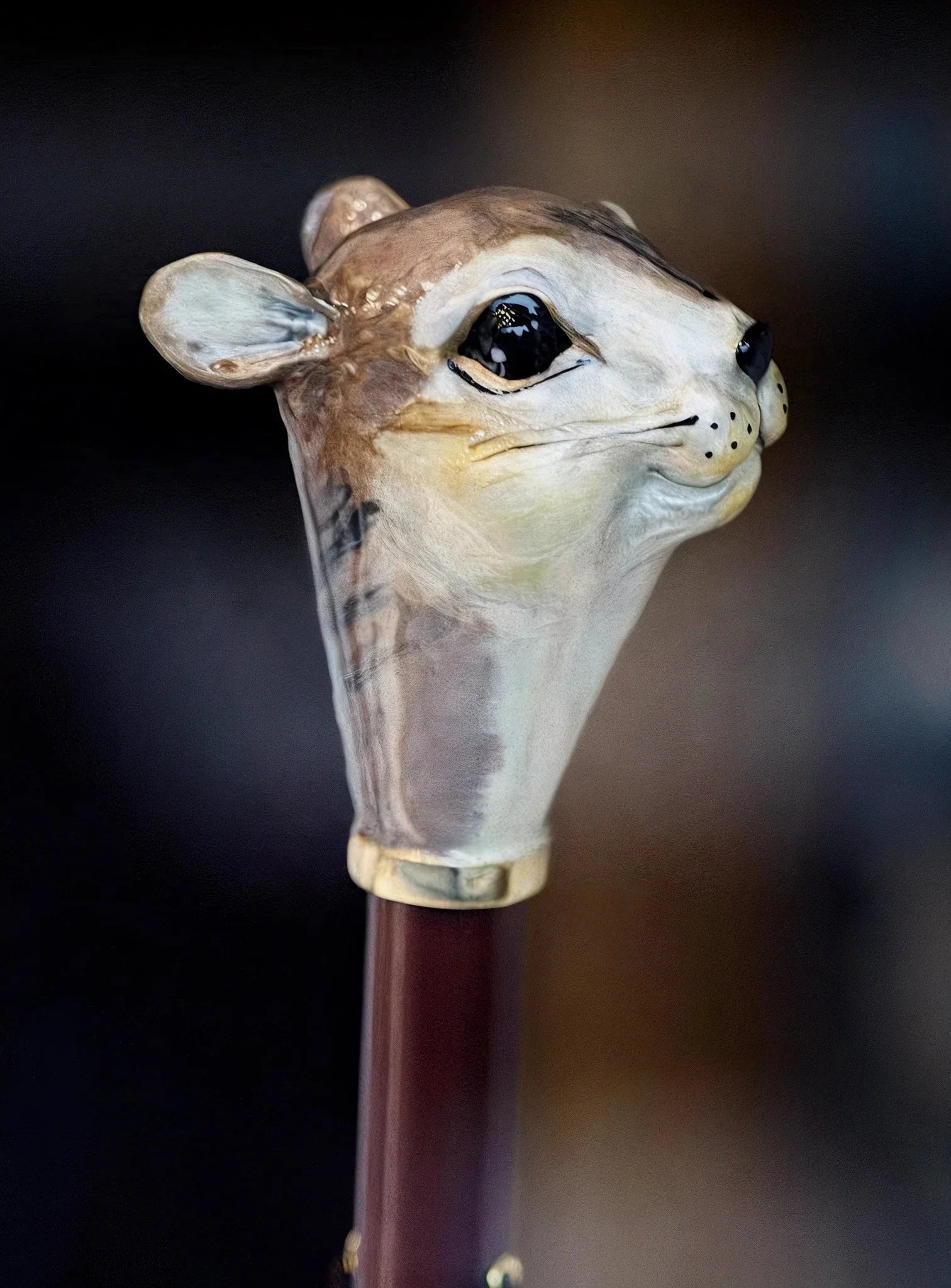
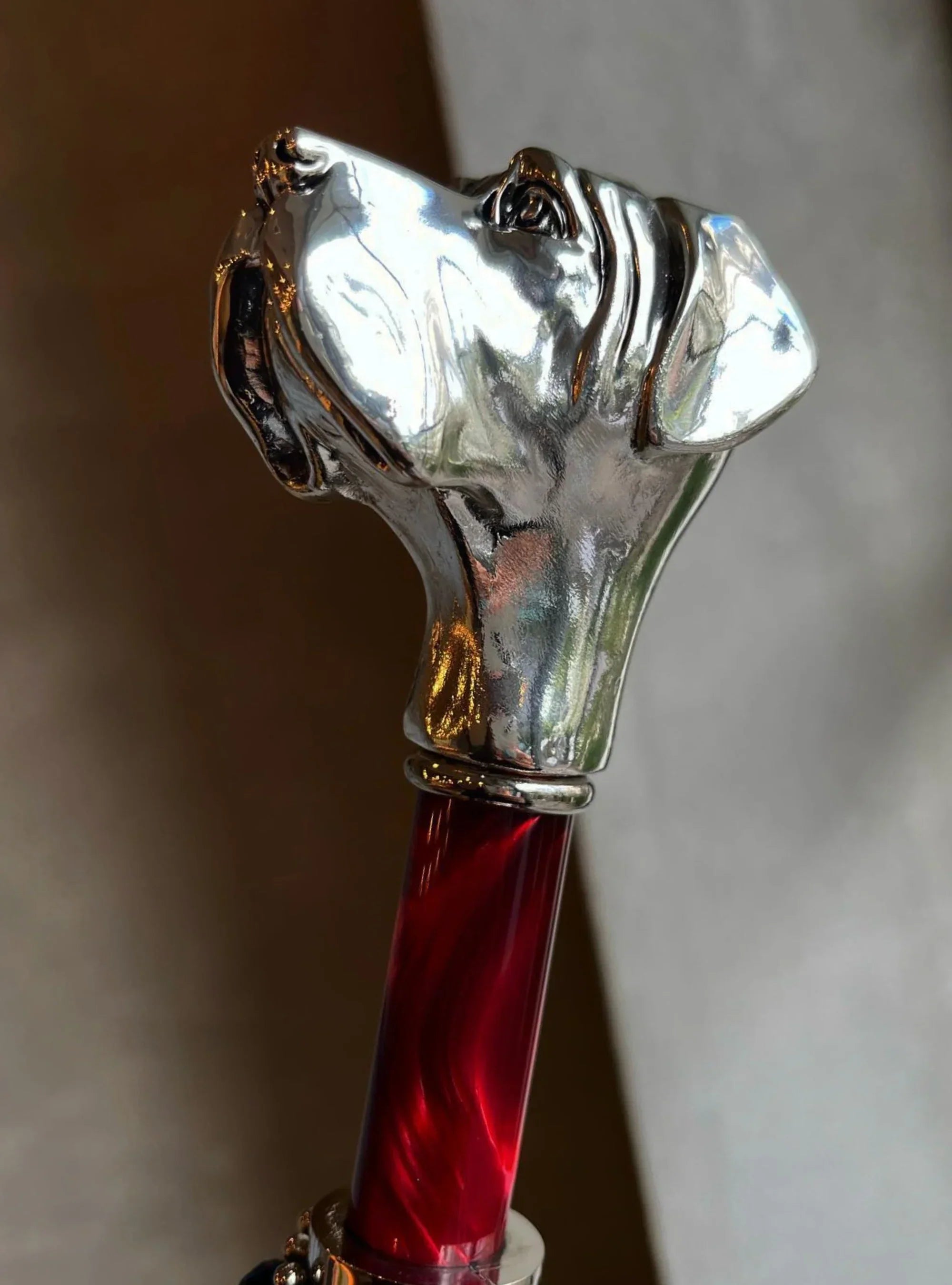
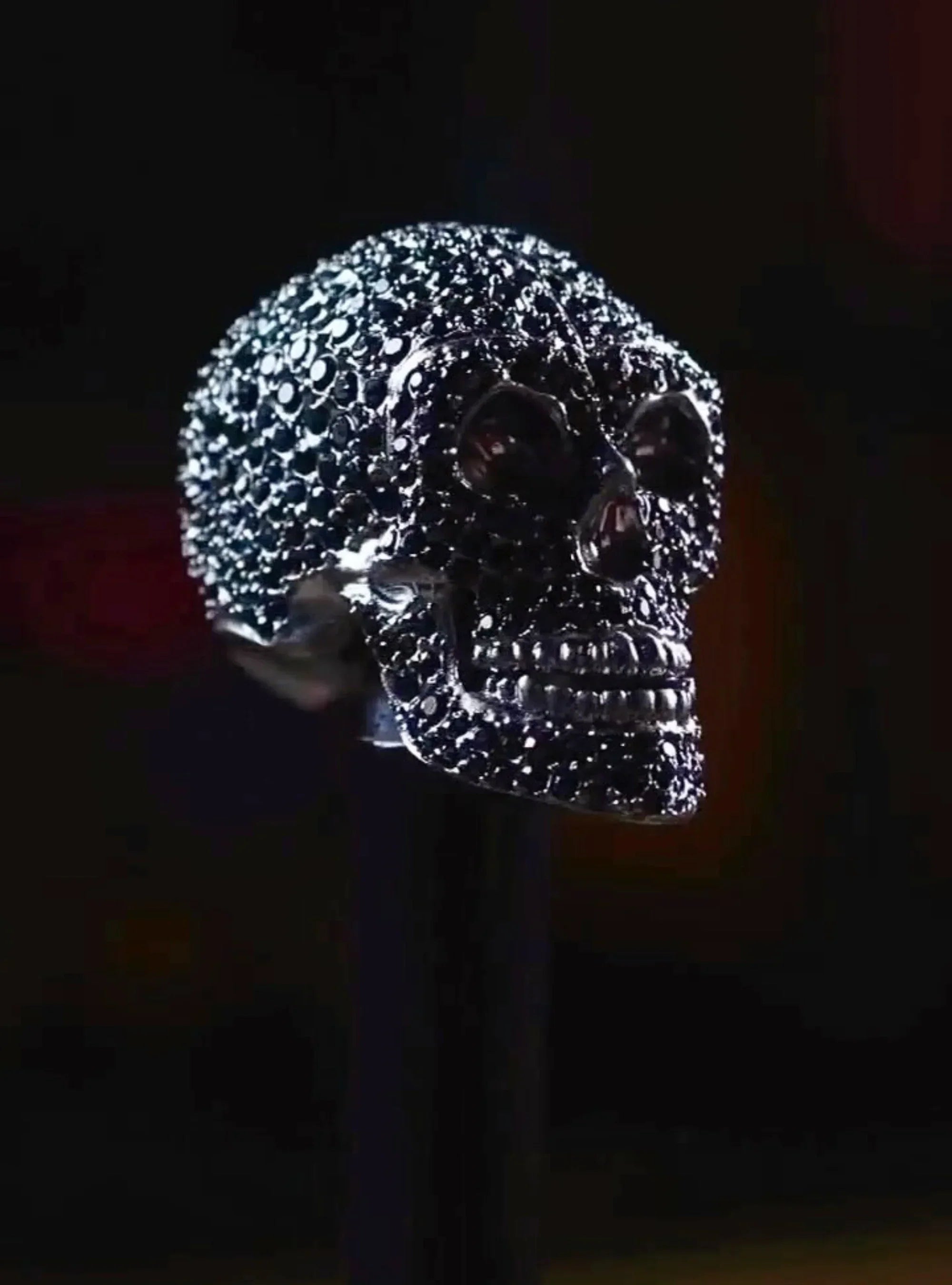
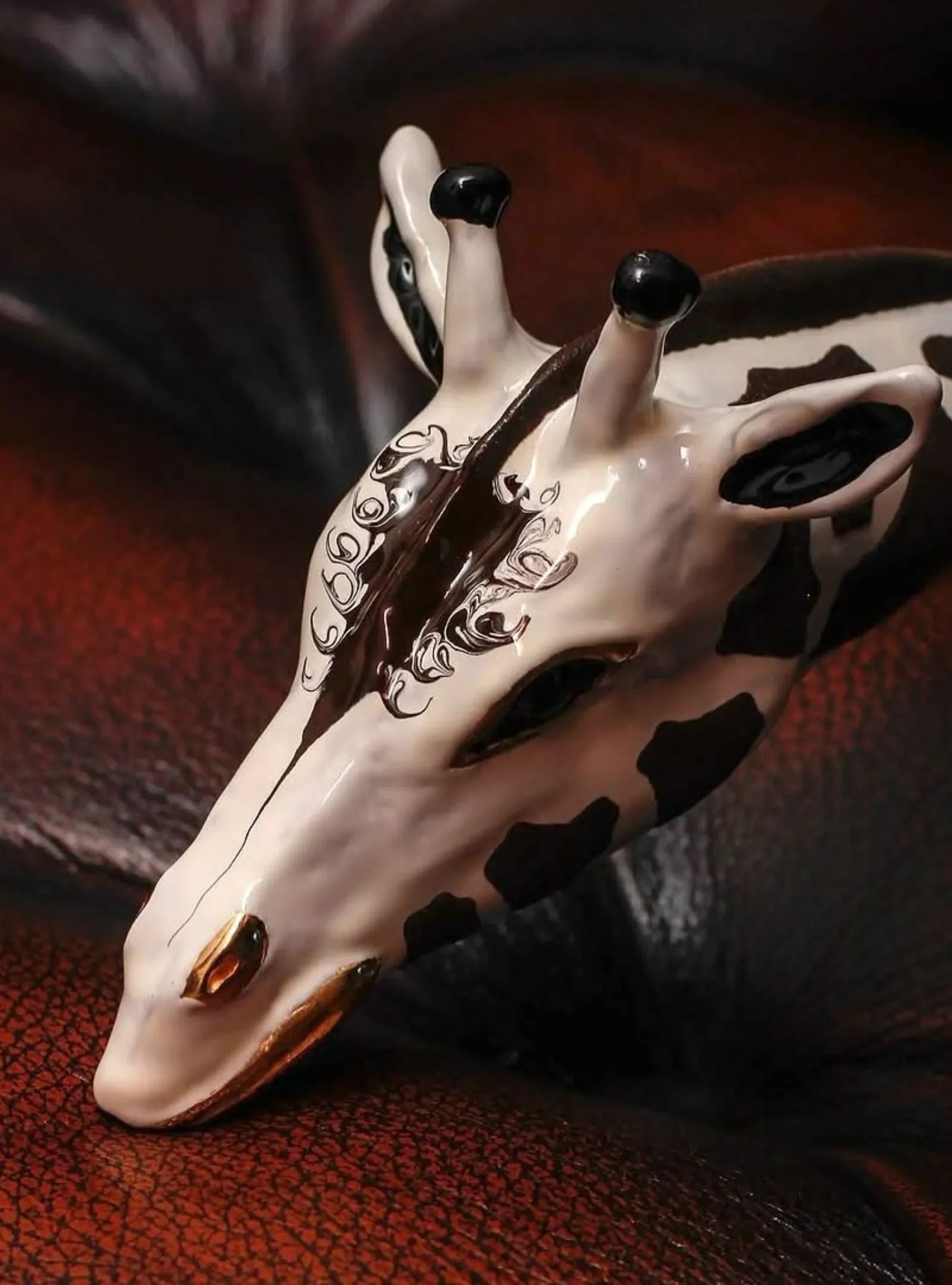
A handle is the only part of the umbrella you touch every time you use it. It's also the easiest place to fake luxury with a glued veneer.
- Non-negotiable: Hand-finished, not injection-molded-then-painted.
- Genuine leather-wrapped or solid horn/wood handles develop patina; painted resin handles chip within a year.
- Ask specifically: is the handle carved from a single piece, or assembled from a composite core with a decorative shell?
Every Artisan Umbrellas handle is finished by hand and sourced from craftsmen who disclose material origin — no "wood-effect" language.
5. Stitching Density and Panel Finishing
Count stitches per inch (SPI) along the canopy seams. This is the marker almost nobody checks and the one that fails first.
- Under 6 SPI: seams separate within 6 months of regular folding.
- 8–10 SPI (Artisan Umbrellas standard): seams hold through 500+ open/close cycles in our internal durability testing.
- Ferrule (tip) attachment should be pinned or riveted, never glued.
6. Opening Mechanism Integrity
Automatic open/close mechanisms are a convenience feature and a failure point in equal measure.
- Manual mechanisms have fewer moving parts and outlast automatics by a wide margin.
- If automatic, the spring housing should be brass or reinforced polymer — not the thin steel spring found in most mass-market autos, which fatigues after roughly 200–300 cycles.
7. Provenance and Atelier Accountability
The final marker isn't material — it's traceability.
- Can the brand name the workshop, region, or artisan lineage behind the piece?
- Is there a named craftsman or atelier associated with the frame, canopy, or handle — or only a factory code?
This is the marker that most separates genuine heritage goods from private-label products with a premium price tag.
The Anonymized 5-Brand Comparison
We rated 5 competing premium-positioned umbrella SKUs against all 7 markers. Full = meets standard fully. Partial = meets standard on paper, fails on inspection. None = does not disclose or does not meet standard.
| Marker | Brand A | Brand B | Brand C | Brand D | Brand E | Artisan Umbrellas |
|---|---|---|---|---|---|---|
| Frame system disclosed | Partial | None | Full | None | Partial | Full |
| Canopy T-rating disclosed | None | None | Partial | None | None | Full |
| Solid wood/cane shaft | None | Partial | None | None | Full | Full |
| Hand-finished handle | Partial | None | Partial | None | Full | Full |
| 8+ SPI stitching | None | None | Partial | None | Partial | Full |
| Reinforced opening mechanism | Partial | Partial | Full | None | Partial | Full |
| Named atelier/provenance | None | None | Partial | None | Full | Full |
Only 1 of the 5 competing SKUs we tested met more than 3 of the 7 markers in full.
The exact rib gauge specifications, T-rating documentation, and SPI test results behind this table — along with the full configuration matrix for each Artisan Umbrellas frame-and-canopy pairing — are published on the individual product spec pages at [artisanumbrellas.com/collections — link placeholder]. That's where we put the numbers a marketing page usually hides.

The Real Definition of Luxury Here
True luxury in an umbrella isn't the logo on the handle. It's whether the frame recovers its shape after the fifth storm, whether the canopy still repels water in year three, and whether the handle was shaped by a hand or a mold.
Use this 7-point checklist on any umbrella before you pay a premium price for it:
- Named, traceable frame system
- Disclosed canopy T-rating
- Solid shaft material (wood, cane, or reinforced composite)
- Hand-finished handle with disclosed material
- 8+ stitches per inch on canopy seams
- Reinforced, tested opening mechanism
- Named atelier or craftsman provenance
If a product page can't answer at least 5 of these with specifics, the word "premium" on it is doing more work than the umbrella will.

Share:
How to Choose a Luxury Umbrella That Will Last 20 Years?
Bespoke Umbrella vs. Designer Brand Umbrella: Which Is the Smarter Investment?